In 2026, OpenAI announced that AI had derived a solution to one of the Millennium Prize Problems: the Navier–Stokes equations. The news made me feel that we are truly living through a new era. Technology is beginning to offer answers to questions that humanity has struggled with for a long time.
Whenever I think about the power of science and technology, I remember reading Heisenberg’s work in college. In 2013, I discussed quantum mechanics and Heisenberg’s ideas in class. It was not easy to understand at the time, but I clearly remember the question it left me with: scientific progress can profoundly shape human life, so how should those who develop powerful technologies use them responsibly?
As the film Oppenheimer also reminded me, the tragedy of World War II and the atomic bomb shows that scientific progress does not always lead to good outcomes. What technology is capable of doing cannot be separated from how we choose to use it.
Today’s AI raises similar questions. How can we protect personal data? How can we prevent AI from being misused for hacking or surveillance? How much authority should we give to technologies that can make decisions and act on our behalf?
I do not believe in technology unconditionally. But I do believe in humanity’s ability to create standards that protect one another and correct harmful directions. As AI becomes more powerful, the principles we choose to uphold must become clearer as well. I believe technological progress should ultimately expand, not diminish, human dignity and freedom of choice.
You can recognize discomfort more easily when a better alternative already exists.
Before that, you might not even realize something is inconvenient. You just use it because that’s what you’ve always used.
Sketch was like that. Figma made the collaboration problem visible. Once you could imagine how collaboration could work, it became obvious what was missing in Sketch.
Maybe that’s why finding a problem is so hard, and why making an invisible problem visible is such an important part of design.
028gentle monster
May 21, 2025
I bought my first pair of Gentle Monster glasses in 2013. Black frame, oversized enough to feel intentional. I bought them for one reason: they looked good.
At the time, Gentle Monster was not yet everywhere. But in Korea, it already had a particular kind of audience - people who did not just need glasses, but wanted their glasses to say something.
That idea became clearer when I visited its Cheongdam store around 2021. It felt less like an eyewear shop and more like an exhibition that happened to sell frames. The installations were the point. The glasses were almost the souvenir.
That has always been Gentle Monster’s real skill: making eyewear feel less like a medical device and more like a cultural object.
So Google’s partnership with Gentle Monster and Warby Parker for Android XR glasses makes sense. On paper, Gentle Monster is not the obvious choice. The U.S. eyewear market is dominated by EssilorLuxottica, which controlled nearly 28% of retail sales in 2024; Warby Parker held 7.2%. Gentle Monster is much smaller in the U.S.earnestanalytics
But smart glasses have a problem that better hardware alone cannot solve: people have to want to wear them in public.
Google can build the AI. It can add navigation, messaging, cameras, and audio. But none of that matters if the glasses look like something you were issued at work.
Google’s own framing is telling: it says the glasses need to be stylish and comfortable enough that people will happily wear them all day. That is precisely where Gentle Monster has spent years building credibility.blog
Warby Parker makes practical, approachable everyday eyewear. Gentle Monster makes eyewear that people might wear even if the lenses did nothing at all.
That is probably why the partnership is interesting. Google is not only trying to put technology into glasses. It is trying to make glasses that do not announce themselves as technology.
The real question is not, “What can these smart glasses do?” It is: Would you wear them even when your phone is fully charged?
025solo travel always seems to turn unexpected things into reality.
I’m still curious about so many things, and I still want to learn. I want to discover new things, see familiar things differently, and keep finding inspiration in all kinds of places.
More than anything, I want to keep living with a little romance at the center of my life.
I love talking to people who come from places and lives I’ve never experienced, sometimes ones I couldn’t even imagine. There’s something special about trying to understand them. When their experiences somehow enter my own, it feels like another dimension opens up.
That’s why I want to keep traveling. Keep being curious. And keep discovering new things.
Wrapping up my trip to New York.
022heading hierarchy, design system and typography
The design system originally had too many heading levels, from H1 to H7.
The largest H1 was actually used less often than I expected. On the website, it would probably only appear once or twice, so I separated it out as Display and reorganized the remaining headings around H1 and H2.
There were a few reasons for simplifying the hierarchy:
The product is not particularly content-heavy.
It is not structured around long-form, document-style content.
Event pages are an important part of the experience.
In the actual UI, deeper levels like H4–H6 were rarely needed. H3 and H4 were also visually very close.
The typography is centered around serif headings, so having too many levels didn’t add much value.
Instead of keeping a large number of heading levels just for the sake of having them, I wanted the system to reflect how the content is actually structured and used.
Icon. An icon of an era. An iconic place. An icon on an interface.
They are subtle yet sophisticated, like a good wine. And they are always contributing messages, whether we intend them to or not.
That’s what I find interesting about icons. They can feel like such a small part of an interface, but people bring their own experiences, expectations, and cultural contexts to them. All of those things influence how an icon is interpreted and what kind of meaning it communicates.
I wanted the colors to do a little more than just make the page look nice. Since we couldn’t redesign the whole website at once, I started introducing the new brand direction through the 2026 event page.
I used colors from the same visual system as the hero imagery, but gave different sections different levels of emphasis. The main event information and highlights get stronger colors, while the secondary sections stay quieter.
It was a simple way to create a sense of hierarchy without making the page feel like every section was competing for attention. I wanted people to be able to look at the page and instinctively know where to look first.
In Korea, Zespri has a very large share of the gold kiwi market. But there’s a problem. New Zealand-grown kiwis have a limited growing season. The New Zealand season runs roughly from April to November.
So what happens from November to March?
The product disappears from the shelves for a few months. For consumers, that’s inconvenient. For a brand, it’s probably not ideal either. You don’t want to build a habit around a product and then suddenly disappear.
So in 2004, Zespri started growing kiwis in Jeju, one of the mildest regions in Korea.
During the New Zealand season, it’s NZ. When that season ends, it shifts to ZGS - Zespri Global Supply.
Same brand. Same product. Different growing region.
I think this is a pretty brilliant solution.
They didn’t need to create a new product or convince people to buy something else. They simply connected two growing seasons in two different parts of the world.
The result is the kiwi never really disappears.
Not necessarily people who are accomplishing something big, but people who are just really into something, and keep doing it.
Someone learning a second language. Someone who reads the newspaper at the same time every day. Someone who hears music in a movie and has to find the soundtrack afterward. Someone completely obsessed with a certain period of time. Someone who looks closely at every single icon. There is something I really admire about that kind of consistency.
Maybe nothing shows human nature more honestly than emotion.
Most of the time, we keep ourselves in order. We choose what to say, think about what kind of expression to make, and care about how we appear to other people. We shape ourselves a little before we stand in front of others. We call these things manners, or attitude.
But when emotion rises, all of that can fall apart very easily.
Anger is especially like that. When we can’t hold it back, it shows a side of us that people don’t usually see. Our tone changes. Our face changes. The way we treat the other person changes. Even parts of ourselves that we usually hide can come out.
That is why I think of emotion as a kind of nakedness.
Just as being naked reveals the body that was hidden, emotion reveals parts of ourselves that we normally keep hidden. It can happen in a very short moment. It might start with a misunderstanding, a small comment, or something that has been building up for a while.
And then the emotion passes.
The anger goes away. A few minutes later, everything can feel normal again. But the person you showed in that short moment doesn’t simply disappear.
I think that part is a little scary.
We can lose control for just a moment, and in that moment, reveal much more of ourselves than we wanted to. Maybe it was something that would have passed if we had just waited a little. Maybe it was something we didn’t need to show the other person at all.
I thought about this today when I saw someone get angry.
It wasn’t the fact that they were angry that felt disappointing. It’s normal to get angry. Everyone does. It was seeing how much of the person came out when they couldn’t hold that feeling back.
The longer I observe people, the more I think these moments can tell us more than the calm ones.
What we can’t tolerate, how we act when we’re angry, how we treat someone when we’re uncomfortable, sometimes these things tell us more about a person than what they like or what they are good at.
Emotion is probably one of the closest things to human instinct. And maybe that is why we have to be careful with it.
We can’t become people who never feel anger.
But maybe we can become people who wait a little before showing it.
Maybe understanding people is also about watching these small moments for a long time.
I recently read that one of San Francisco’s older art schools is closing. It made me think about something I’ve been hearing more and more lately: Does college still matter in the age of AI?
I understand why people question it. AI can teach you almost anything now. You can learn software, watch tutorials, ask questions, and even get feedback without stepping into a classroom.
But I don’t think education is only about getting information.
When I studied design, one of the most frustrating things was that professors rarely gave me a clear answer. I often wanted to hear, "This is right" or "This is wrong." Instead, they would give me a book, a reference, or a question and tell me to figure it out myself.
At first, that felt vague. Later, I realized that this was probably the point.
Design doesn’t usually have one correct answer. You need to research, compare different possibilities, make a decision, and explain why you made it. School gave me a space to practice that process over and over.
I think this is also where education becomes interesting in the AI era.
AI is getting very good at giving us answers. But having more answers doesn’t automatically mean having better judgment. Someone still needs to decide what question is worth asking, which direction makes sense, and when an answer actually feels right.
For me, the value of school wasn’t really the name of the school or the diploma. It was having a place where I could experiment, be wrong, ask questions, and slowly develop my own judgment.
That’s why I try not to judge a school only by its reputation. Every school has its problems, and every person will have a different experience. But the value of education can be very personal.
Maybe the question isn’t whether college still matters.
Maybe it’s what kind of learning is still worth paying for when information is everywhere.
And I think having the space to develop your own way of thinking is still one of them.
005originality, the Transamerica Pyramid
Oct 10, 2025
I’ve walked past the Transamerica Pyramid so many times, but one day I stopped and really looked at it. It felt much more detailed and solid than I expected.
It’s hard to imagine now, but when it was proposed in 1969, a lot of people didn’t like it. It was considered too strange and too different from the existing skyline. Today, that same difference is probably the reason it feels so iconic.
It made me think about how we react to new things. The Louvre Pyramid and Pompidou Center went through similar criticism. Maybe it’s almost unavoidable. When something looks different from what we’re used to, we naturally question it first.
But I think that’s also where interesting design starts.
The designs and products we remember usually had something that felt a little unexpected. Someone decided to look at a familiar problem differently, even when there was no guarantee that people would like it.
As a designer, I don’t want to make something that anyone could have come up with. Not just to be different, but because I think different perspectives make the whole design ecosystem better.
I recently heard Ian Wang from Adobe talk about creativity as keeping your own point of view. He used the phrase "go against the grain," having the courage to do something your own way, even when other people don’t immediately agree.
I like that idea.
Especially now, when AI can help everyone make things faster, having your own perspective might matter even more. The tool can help with the execution, but what you choose to see, question, and make is still yours.
Maybe that’s what the Transamerica Pyramid reminds me of.
You don’t always know if people will like something when you first make it. But sometimes, being willing to make the thing that looks a little different is exactly what makes it worth remembering.
004vibe coding
Aug 24, 2025
Over the past couple of months, I’ve been getting a better sense of how quickly AI is changing the way we design and build things. I’ve been learning how GitHub, coding editors, and back-end systems connect, and slowly getting more comfortable with the language engineers use.
When I first started Vibe Coding, I was mostly excited about how quickly I could make things. I could throw an idea at AI and get something back almost immediately. But after a while, I started feeling like something was missing.
The output was there, but sometimes the problem wasn’t.
So I went back to a problem I actually cared about and started building from there. Once I focused on the user’s problem again, prototyping became much more interesting. I could quickly see what was missing, test different flows, and find things I hadn’t thought about before.
It made me realize something pretty simple: AI can help me make things faster, but it doesn’t decide what is worth making.
And that brought me back to a question I’ve been thinking about lately:
What kind of designer am I?
I don’t think my answer is just about the tools I use. A lot of my ideas come from things that don’t look like "design" at first, culture, history, art, games, random things I happen to be curious about.
Maybe that’s my vibe.
I like collecting different kinds of inputs and seeing if they connect somehow. Sometimes they turn into a design idea. Sometimes they just change the way I look at a problem.
I think this matters even more in the Vibe Coding era. When everyone can make something quickly, the interesting part becomes what you notice, what you choose to make, and why.
I’m still figuring out what kind of designer I want to be. But I think that’s probably part of the process too.
003doom scrolling
Aug 10, 2025
Scrolling itself isn’t necessarily the problem. What matters is what we’re scrolling through, and how it makes us feel.
Instagram and Threads are built around the same basic interaction: scroll through a feed. But the experience can feel completely different.
Instagram is heavily visual. Beautiful photos, short videos, recommendations, and ads keep competing for attention. After a while, the feed can start to feel exhausting. There’s also a growing problem with AI-generated content: the more polished everything looks, the harder it becomes to know what is actually real.
Threads feels different because it’s mostly words. Reading someone’s thoughts takes a little more effort, but that effort also makes the content feel more intentional and human. It’s easier to pause, respond, and actually participate in a conversation.
So maybe "too much scrolling" isn’t really about time. It’s about attention without meaning.
A feed can keep you scrolling for an hour and leave you feeling empty. Another can keep you scrolling for the same amount of time and leave you with an idea.
What could bring people back to Instagram?
I think search is one interesting opportunity.
Instagram used to be a great discovery tool because photos captured something traditional search couldn’t: atmosphere, taste, and context. But today, when we need information, we increasingly turn to AI and search engines.
More information isn’t necessarily better. Useful and trustworthy information is.
Instagram has something AI can’t easily reproduce: a social graph. Instead of searching for "best restaurants in San Francisco," imagine searching through places your friends have actually visited, seeing their photos and reading what they really thought.
That could make discovery feel less like searching a database and more like asking people you trust.
Maybe the future of social search isn’t about generating more answers. It’s about finding the right people behind the answers.
002where do you live?
Jul 19, 2025
Today, someone asked me, “Where do you live?”
It’s a common question when you first meet someone. But I think we often mean more than just a city or neighborhood. We use where someone lives to imagine their daily life, what they’re surrounded by, the kind of people they meet, and maybe even the kind of person they are. I’ve been thinking about how much a place can shape your life: the opportunities you find, the direction you take, and eventually, who you become.
I first noticed this when I lived in Seoul. South Korea is very centralized, and so much of the country’s politics, economy, culture, and opportunity is concentrated in one city. My family moved there because my sister got into a university in Seoul. It happened almost by chance, but looking back, living there made many things easier for me. Joining study groups, meeting new people, and finding work opportunities all felt more possible.
Now I live in Silicon Valley. At first, I came here for a simple reason: I wanted to grow my career. But over time, I started to see the place differently.
The people I meet here come from everywhere. They are designers, engineers, researchers, founders, and artists, each with different stories and ambitions. I also love how easy it is to show up somewhere, whether it is a meetup, conference, or small community event, and start a conversation with someone new.
People here are often open to sharing what they’re working on, what they’re worried about, or what they’re trying to learn. Through those conversations, I’ve realized that we tend to carry many of the same questions. No matter what we do or where we are in life, most of us are trying to find balance, build meaningful relationships, and figure out what matters to us.
As both a designer and just a person, I value being in a place where I can talk openly about the things I care about: AI, design, new tools, and technology. Small moments, like a session with Ko Nakatsu’s Design Writers group, a design conference, or a casual meetup, often give me a little spark. They remind me that growth is not only about where you work. It’s also about the environment around you and the people you learn from.
So when someone asks me, “Where do you live?” I think my answer is more than a location. I live in a place where I can keep having meaningful conversations, stay curious, and feel inspired.
001disposable vs. lasting information
AI is great at answering questions in the moment. But not every answer needs to stay with us.
A dinner suggestion can be disposable. Learning a new word is different, you may want to remember it and use it later.
I’m interested in designing AI experiences that help people turn useful information into knowledge they can retain and apply.
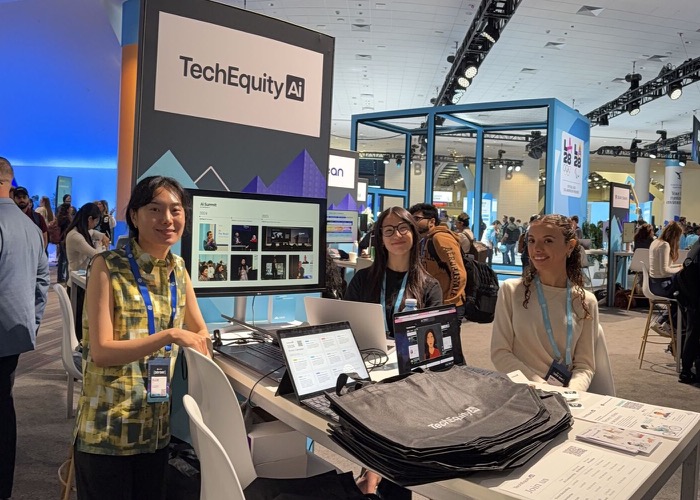
Techequity AI UI/UX design
San Francisco story - ongoing design and build
Shades product design
Lingoleap ai product design